
45 mm vs. 60 mm Rotary Cutter for Quilting
Choose a rotary cutter by the cuts you repeat. Check your blade, mat, ruler and fabric stack before paying for a bigger handle.
In this guide
Choose a 45 mm rotary cutter for ordinary quilt piecing, strips and blocks. Consider a 60 mm cutter if you regularly cut long straight pieces through thicker stacks and the 45 mm cutter still leaves layers joined after you check the blade, mat and setup. A larger blade is a useful second tool when your work actually calls for it.
Choose by the cuts you repeat
| Your usual cut | Where to start | What would justify switching |
|---|---|---|
| Straight strips, squares and ordinary piecing | Use the 45 mm cutter on a suitable mat with a rigid quilting ruler. | Try the 60 mm if you repeatedly run into trouble with thicker, straight stacks within the cutter maker’s guidance. |
| Long straight cuts through several layers | Start with the 45 mm at a stack size it separates comfortably. | A 60 mm is worth considering if splitting the same work into smaller stacks regularly interrupts your cutting. |
| Tight curves and small templates | Check what your template calls for. OLFA lists 18 mm and 28 mm cutters for smaller, curved work. | Match the blade to the curve and template. A 60 mm blade is intended for a different job. |
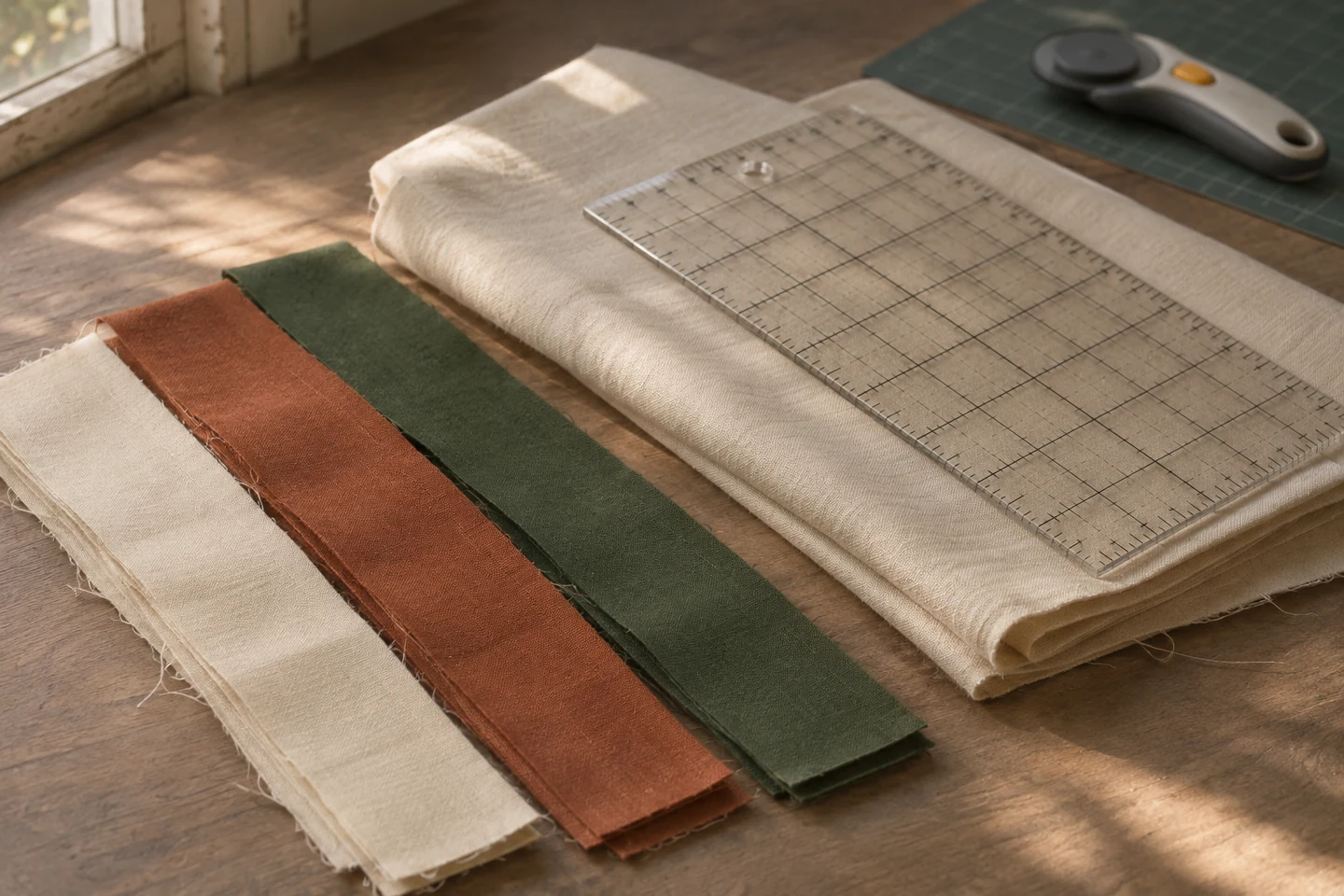
Rule out a worn blade or a cramped mat
Start with a scrap of the cotton you’re about to cut. Retract or cover the blade when you’re setting up. Check the cutter’s guard and use a straight, compatible ruler on a flat, suitable cutting mat. Replace a blade already known to bind with one listed for your exact handle before the check. If a heavily used groove sits right under the cutting line, choose an intact area.
Take a normal cut through a small stack with your current cutter, following the manufacturer’s instructions. Close the guard and set the cutter down before examining the pieces. See whether every layer separated and whether the strip holds its width at both ends. If you get little bridges of uncut thread in a thin stack, check the blade and replace it with a fresh compatible one if it is worn. When the thin stack cuts cleanly and the thicker one does not, reduce the stack. If you do that on nearly every long cut, you have a reason to look at the 60 mm.
Cut away from your body, with the fingers holding the ruler back from its cutting edge. Keep steady pressure and stop if the ruler shifts or the cutter starts to bind. Follow the cutter maker’s handling and mat guidance.
OLFA safe handling · OLFA mat care
Compare the complete setup
Two like-for-like examples are OLFA’s squeeze-handle RTY-2/DX 45 mm and RTY-3/DX 60 mm. OLFA identifies an Endurance blade in each exact package. Its advertised layer counts are for those products and its specified material. Use your own scrap check and the exact package instructions when deciding how much fabric to cut. Thickness changes when you switch cotton, fold a piece or introduce seam allowances.
Check the price of a compatible spare blade along with the handle. On November 21, Fat Quarter Shop displayed $34.98 for the 45 mm DX and $52.48 for the 60 mm DX, a $17.50 difference before shipping and tax. One corresponding spare Endurance blade was $13.48 for the 45 mm and $23.48 for the 60 mm. Price and availability can change.
If you’re starting with no cutter, ruler or mat, compare the full basket. The same shop displayed $35.98 for OLFA’s 45 mm starter kit, which uses a different handle and includes a 12 × 18-inch mat and a 6 × 12-inch ruler. Check the longest cut you make before counting that mat as enough. A straight 20-inch cut parallel to the 18-inch edge needs a different setup or a stop to reposition. The blade size cannot recover the missing surface.
45 mm maker specifications · 60 mm maker specifications · 45 mm price · 60 mm price · 45 mm spare · 60 mm spare · Starter kit
If you mostly piece from one or two layers and already get clean cuts, keep the 45 mm. Put a mat that fits the work or a fresh blade ahead of a second handle. The 60 mm earns its place when the same long, thicker cuts keep coming back.